
Energy poverty remains a widespread challenge across the European Union, affecting households that struggle to heat, cool or power their homes at an affordable cost. It is driven by a combination of structural factors, including low income, inefficient buildings, exposure to volatile energy prices, limited access to clean technologies and uneven consumer protections.
Recent EU legislation has significantly strengthened the framework for addressing energy poverty. Through the Fit for 55 reforms, Member States are now required to treat energy poverty as a structural component of the energy transition. Obligations related to energy poverty extend across multiple legislative instruments, covering energy efficiency, building renovation, market protection and social compensation mechanisms. As a result, national authorities face the challenge of implementing these requirements in a coherent and coordinated manner, rather than through fragmented or isolated measures.
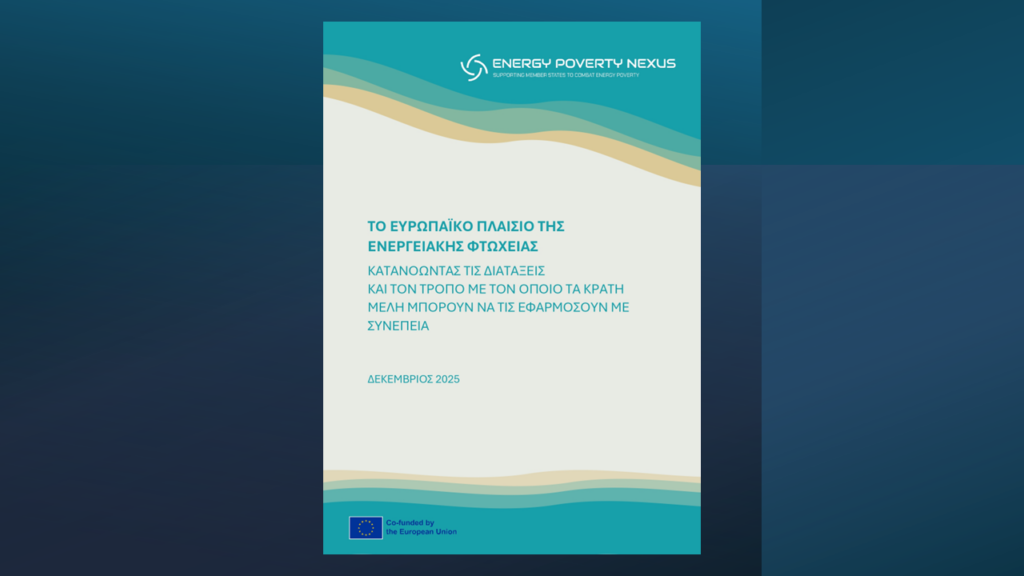
This Policy Brief, The EU Energy Poverty Framework: Understanding the Provisions and how Member States Can Implement these Coherently, has been now translated into Greek, providing Greek policymakers and implementing authorities with a concise guide to the EU’s provisions on energy poverty and explaining how these requirements interact across legislation. It clarifies what the relevant Directives and Regulations expect in practice and highlights the implications for national planning, governance and implementation.
The analysis focuses on provisions relevant to energy poverty in four key legislative instruments: the recast Energy Efficiency Directive, the recast Energy Performance of Buildings Directive, the Social Climate Fund Regulation, and the Electricity Market Design reform. Together, these instruments form the core of the EU’s current approach to identifying households at risk, prioritising them in efficiency and renovation policies, protecting them within energy markets and supporting them through targeted funding.
The Policy Brief highlights the importance of coordination across policy domains, planning cycles and delivery mechanisms. It underlines the need for aligned definitions, interoperable data systems, integrated funding pathways, and consistent protection measures to ensure that EU obligations translate into effective national action.
You can download the Greek version of the policy brief here.